Products

View

Sale

Tony's 4 Favs Bundle from Giardino Fresco's Miami nursery

Arkin Starfruit Plant Carambola 28"+ / 3 Gal

Arkin Starfruit Tree for Sale in Florida, 3 Gal Arkin is the sweet, low-acid carambola most Florida growers plant. It's compact, productive, and often fruits more than once a year. This tree is 28"+ in a 3 gal pot, grown at our Miami nursery. In our alkaline soil, give it a micronutrient feed if new leaves go yellow. Grown by Tony in Miami. Ships nationwide, with shipping calculated at checkout. Local pickup in Miami and delivery in Miami-Dade also available. Text Tony: 786-774-2125 From Tony, the grower: Grown by Tony himself at our Miami nursery. Every Arkin Starfruit we send is a tree I've looked after here in Miami. Size: Listed at 28"+ in a 3 gallon pot. See our shipping policy for how trees are packed for shipping. Bigger trees, fairer prices. We keep our prices fair so you get more tree for your money. Care basics: Plant in full sun in well-draining soil, water deeply 2-3 times a week while it settles in, then let the top inch of soil dry between waterings. Feed lightly with a balanced fertilizer during the warm months, and protect young trees from frost (cover or move inside if temperatures drop near freezing). Makes a great gift: Sending it as a gift? Email your gift message to tony@giardinofresco.com after you order and we'll include a gift note with the tree. Shipping: Ships nationwide, with shipping calculated at checkout. Local pickup in Miami and delivery in Miami-Dade also available. Questions? Call or text Tony at 786-774-2125. Arkin Starfruit Tree (Averrhoa carambola ‘Arkin’) — The Most Popular Productive Star Fruit Variety for Home Gardens and Tropical Orchards Grow an Arkin starfruit tree and enjoy one of the most reliable, high-yielding carambola varieties available. The Arkin star fruit tree is the leading commercial sweet starfruit cultivar in Florida and the most widely planted productive starfruit variety outside Asia. Selected in Florida and named after horticulturist Morris Arkin, this Averrhoa carambola cultivar produces abundant crops of golden-yellow, star-shaped fruit with a crisp, juicy texture and balanced sweet-tart flavor. Mature Arkin starfruit trees can yield 200–350 pounds of fruit per year under good conditions, with multiple harvests possible. Young trees often begin fruiting within a few years and can produce 10–40 pounds in the early years, increasing quickly as the tree matures. The fruit is medium to large, uniform, waxy-skinned, and turns from green to bright yellow-orange when ripe. Slice it crosswise and you get the classic five-pointed star that makes star fruit a favorite garnish, salad ingredient, and fresh snack. The flesh is fiber-free, crunchy when ripe, and has a refreshing tropical taste often compared to a mix of apple, pear, grape, and citrus with mild acidity. Allow fruit to ripen fully on the tree for best sweetness. This productive starfruit variety is largely self-fertile and sets good crops even in solid plantings. It thrives in full sun, well-drained soil, and warm tropical or subtropical climates (best growth 68–95°F). Protect from strong wind, frost, salt, and waterlogged soil. Trees typically reach 15–25 feet if unpruned but respond well to pruning and can be kept smaller or grown in large containers. They are evergreen in warm locations and produce attractive pink-lavender flowers. Harvest peaks often occur in late summer/fall and winter, with some fruit available much of the year in ideal conditions. Grow your own Arkin carambola tree for a continuous supply of homegrown star fruit rich in vitamin C. Use the fruit fresh, in juices, smoothies, fruit salads, desserts, or as an edible garnish. Note: people with kidney disease should consult a doctor before eating starfruit due to oxalic acid content. A proven, productive tropical fruit tree that delivers heavy yields of beautiful, tasty star fruit. Perfect for warm-climate landscapes and anyone wanting a reliable star fruit tree. Starfruit (carambola) growing guide Arkin is the leading sweet carambola variety in Florida. Plant facts at a glance Botanical name: Averrhoa carambola Listed size: 3 gallon (28 in.+ listed) Mature size: Usually 15–25 ft and as wide. Easily pruned to 6–10 ft. Sun: Full sun for best fruiting. Protect it from strong wind. Water: Regular water. Keep it moist during flowering and fruiting. Doesn't tolerate flooding. Cold hardiness / USDA zones: Zones 9b–11. Mature trees tolerate brief 27–29°F. Young trees are damaged near freezing. Time to fruit: Grafted trees can fruit within 1–2 years of planting and often crop several times a year in South Florida. Taste and uses: Crisp, juicy, sweet-tart fruit for fresh eating, salads, juices, garnishes, jams and drying. Arkin is a sweet Florida variety. Container vs. in-ground: Grows well in a large pot. Move it in if frost is forecast. Bigger tree, fairer price Many online sellers charge $45–$90 for a starfruit tree, and the cheaper prices are often for 1-gallon plants. Our Arkin is a 3-gallon tree, 28 in.+, a well-rooted tree that's ready to plant, for a fair price. Why Arkin? Arkin was selected in Florida and is the main sweet carambola grown commercially in the state. Its fruit is crisp, juicy and sweet with a little tang, and it's a reliable producer in home yards. Getting the best crops Plant in the sunniest, most wind-sheltered spot you have. In South Florida limestone soils, apply chelated iron and manganese to keep leaves green. In south Florida, expect main crops in late summer to winter, often with more than one flush a year. Care Feed young trees every 60–90 days with a fertilizer containing minor elements. In alkaline soils, iron and manganese sprays help prevent yellowing. Shelter from wind. Pick when the fruit is mostly yellow. Frequently asked questions How long until a starfruit tree fruits? Grafted trees often fruit in 1–2 years. Can I grow starfruit in a pot? Yes. Use a large, well-draining pot and protect it from frost. Why are my starfruit leaves yellow? Often iron or manganese deficiency in alkaline soil. Use chelated micronutrients. How cold can starfruit tolerate? Mature trees handle brief 27–29°F. Protect young trees. Do you ship to my state? Yes. Ships nationwide, with shipping calculated at checkout. Local pickup in Miami and delivery in Miami-Dade also available. Questions? Call or text Tony at 786-774-2125. Growing information is based on University of Florida IFAS Extension guidance. Results vary with climate and care. Complete growing guide: Arkin Starfruit Growing Guide: Care, Pests and Harvest in South Florida

Regular price $50.49
Regular price $59.00 Sale price $50.49
Unit price  per 
Azadi Pomegranate Tree from Giardino Fresco's Miami nursery

Azadi Pomegranate Plant 12"-18" / 1 Gal

Discover the Azadi Pomegranate (Punica granatum 'Azadi'), a rare and highly prized soft-seeded variety whose name means "Freedom" in Persian — a beautiful nod to its origins in the ancient pomegranate heartland of Iran and Central Asia.This exceptional cultivar produces medium-to-large, eye-catching fruits with creamy yellow to gold-peach skin and delicate pink blushes. Inside, you'll find gorgeous translucent peach-to-light pink arils that are super juicy, exceptionally sweet, and surprisingly low in acidity, with just a pleasant touch of astringency for balance. The seeds are notably soft, making it one of the most enjoyable pomegranates for fresh eating, juicing, or snacking straight from the tree.Why you'll love growing Azadi: Sweet & unique flavor — Often described as one of the sweetest pomegranates available Soft seeds — Easy to eat with minimal crunch Beautiful ornamental appeal — Glossy green leaves, vibrant orange-red summer blooms, and stunning peach-toned fruit Productive & hardy — Mature trees can yield 20+ lbs of fruit; cold hardy down to Zone 7 (survives brief dips to about 5°F) Compact size — Reaches 10–15 ft tall and wide, perfect for home orchards, patios, or espalier — easily managed with pruning Our Azadi plants are already well-established and almost ready to start fruiting, giving you a head start on harvesting your own delicious crop. Grown with care at our Miami nursery, these vigorous plants ship healthy and ready to thrive in your garden.Bring home a taste of Persian heritage and freedom with every sweet, jewel-like bite. Limited stock — order your Azadi Pomegranate today from GiardinoFresco.com! Pomegranate growing guide Azadi is a soft-seeded variety with sweet, low-acid arils. Plant facts at a glance Botanical name: Punica granatum What ships: 1 gallon (12–18 in. listed) Mature size: A shrub or small tree, 10–20 ft. Easily kept at 6–8 ft. Sun: Full sun. Water: Drought tolerant once established. Regular water while young and during fruiting. Cold hardiness / USDA zones: Zones 8–10. Hardy to roughly 10–15°F when dormant. Time to fruit: Usually 2–3 years from a young plant. Taste and uses: Fresh arils, juice, salads, molasses and grenadine. Container vs. in-ground: Grows well in a large container. Care Prune suckers to keep one or a few trunks. Fertilize lightly in spring and summer. In humid Florida, fungal leaf and fruit spots can occur. Good airflow helps. Frequently asked questions How long until pomegranate fruits? Typically 2–3 years. Is pomegranate cold-hardy? Yes. It's one of the hardier fruits here, generally fine in zones 8–10. Do I need two plants? No. Pomegranates are self-fruitful. Can pomegranate grow in a pot? Yes. Use a large, well-draining container. Do you ship to my state? Yes. Ships nationwide, with shipping calculated at checkout. Local pickup in Miami and delivery in Miami-Dade also available. Questions? Call or text Tony at 786-774-2125. Growing information is based on University of Florida IFAS Extension guidance. Results vary with climate and care. Complete growing guide: Azadi Pomegranate Growing Guide: Care, Pests and Harvest in South Florida
Regular price $45.00
Regular price Sale price $45.00
Unit price  per 
Condo Mango Gift Duo: grafted Pickering mango tree from Giardino Fresco Miami

Backyard Mango Lover Gift Set

Give them the Miami backyard dream: their very own mango tree. Choose a grafted Pickering or Valencia Pride mango and we pack it with the shears, fertilizer and soil amendment it needs to get growing. It's a gift they'll taste every summer. Choose the mango Pickering Mango, grafted (3 gal). Sweet, juicy, fiberless golden flesh with a red blush. A compact grower that stays around 5–10 ft with pruning and bears young. Great for smaller yards and large containers. Valencia Pride Mango, grafted. A Florida favorite with big, beautiful, fiberless fruit and a sweet, rich flavor. Grows into a classic backyard shade-and-fruit tree. Also in the box Pruning Shears (Intermediate) for shaping and cleanup. 2 lb 10-10-10 fertilizer for new leaves, strong roots and future fruit. Coconut coir brick (expands to 0.5 cu ft) to help roots settle in fast in sandy or rocky South Florida soil. Why it makes a great gift Save compared with buying each item separately ($104.98 value with Pickering, $98.98 with Valencia Pride). Grafted and true to type, so it often flowers and fruits in 2–3 years. Already have trees in the yard? Pair this set with our $80 Sick Tree Diagnosis Visit (Miami-Dade) and we'll check on the rest of the yard while you're at it. Holiday shipping and pickup Ships nationwide, with shipping calculated at checkout. Local pickup in Miami and delivery in Miami-Dade also available. Shipped in a sturdy container with careful packaging and our Plants Arrive Alive Guarantee. Free local pickup at our Miami nursery, 2264 SW 22nd Ave, Miami, FL. Holiday savings: use code HOLIDAY10 for 10% off orders of $75 or more, valid November 1 – December 31. Grown at our family nursery in Miami for Zones 9–11.

Regular price From $89.00
Regular price Sale price From $89.00
Unit price  per 
View product

Sale

Exotic Tropics Trio: grafted Black Gold Jackfruit tree from Giardino Fresco Miami

Black Gold Jackfruit Plant Grafted 24+ Inches

Black Gold Jackfruit Tree, Grafted – GiardinoFrescoThe Black Gold Jackfruit Tree, Grafted is a premium variety celebrated for its outstanding flavor, heavy productivity, and compact growth habit. This superior grafted tree displays large, glossy, dark green leaves and produces fragrant flowers that develop into impressive, elongated fruits. Renowned for its bold, complex sweetness that sets it apart from other jackfruits, Black Gold yields large, high-quality fruits—often exceeding 20 pounds each—with vibrant golden-yellow, aromatic flesh perfect for fresh eating and culinary uses.Key Highlights:• Grafted for Reliability — Carefully propagated from proven, high-performing stock to ensure faster fruiting (typically within 2–3 years), true-to-type performance, and consistent heavy production.• Compact & Versatile — Naturally manageable size, easily pruned to 8–12 feet. Ideal for home gardens, patios, urban orchards, and smaller subtropical landscapes.• Exceptional Yields — A prolific producer capable of 100–200+ pounds of fruit per mature tree. Fruits ripen in the late season, extending your tropical harvest.• Gourmet Flavor — Long, tapered fruits with rich, sweet, and fragrant flesh. Excellent for eating fresh, making chips, smoothies, desserts, and savory dishes.Growing & CareThis tree thrives in well-draining, fertile soil with full sun and consistent moisture (avoid waterlogging). It performs best in subtropical to tropical climates (USDA zones 9–11) and tolerates a wide temperature range once established. Provide frost protection for young trees. Fertilize regularly with a balanced tropical fruit formula during the growing season. Light pruning helps maintain shape, control size, and promote airflow. Shipped in a sturdy container, ready to establish quickly in your garden.Details at a Glance• Growth Habit: Moderate to fast once established.• Mature Size: 15–25 feet unpruned; easily kept smaller with pruning.• Lifespan: 50+ years with good care.• Fruit Season: Primarily late season (September–October in most subtropical areas).Bring home the Black Gold Jackfruit Tree, Grafted for a rare and rewarding tropical producer that combines beauty, productivity, and exceptional gourmet fruit. Grown to the highest standards at GiardinoFresco—your source for premium tropical fruit trees. 🌴​​​​​​​​​​​​​​​​​​​​​​​​​​​​​​​​​​​​​​​​​​​​​​​​​​ Jackfruit growing guide Black Gold is a grafted variety known for sweet, aromatic flesh. Plant facts at a glance Botanical name: Artocarpus heterophyllus What ships: Grafted plant, 24 in.+ listed Mature size: Can reach 30–50 ft. Commonly pruned to 10–15 ft. Sun: Full sun. Water: Regular water. Doesn't tolerate flooding. Cold hardiness / USDA zones: Zones 10b–11. Young trees are damaged near 32°F. Time to fruit: Grafted trees often fruit in 3–4 years. Taste and uses: Ripe fruit eaten fresh. Young fruit is cooked as a vegetable or meat substitute. Container vs. in-ground: Large pot only while young. Care Prune yearly to control height. Fertilize young trees every 1–2 months. Support heavy fruit. Frequently asked questions How long until jackfruit fruits? Grafted trees often fruit in 3–4 years. Is jackfruit cold-hardy? No. Protect it from frost. How big does it get? Big. Prune yearly to keep it manageable. Can it grow in a pot? Only while young. Do you ship to my state? Yes. Ships nationwide, with shipping calculated at checkout. Local pickup in Miami and delivery in Miami-Dade also available. Questions? Call or text Tony at 786-774-2125. Growing information is based on University of Florida IFAS Extension guidance. Results vary with climate and care. Complete growing guide: Black Gold Jackfruit Growing Guide: Care, Pests and Harvest in South Florida

Regular price $55.49
Regular price $65.00 Sale price $55.49
Unit price  per 

Sale

Brown Turkey fig plant with large lobed leaves in a nursery pot

Brown Turkey Fig Plants

Brown Turkey Fig These are air layered from our champion producers. They give tons of big heavy fruit. Because they are air layered the tree is already in a fully mature state so it does a better job at producing big bountiful harvests. Just give it some 10-10-10 fertilizer and water every other day to see the best results! Fig growing guide Brown Turkey is self-fruitful and among the most cold-hardy figs. Plant facts at a glance Botanical name: Ficus carica What ships: Cuttings, 1 gallon or 3 gallon (pick your option) Mature size: Usually 10–15 ft tall and wide. Easily kept smaller with pruning. Sun: Full sun. Water: Keep evenly moist, because figs are shallow-rooted. Water during dry spells and mulch well. Cold hardiness / USDA zones: Zones 7–10. Brown Turkey is one of the most cold-hardy common figs and can regrow from roots after a freeze. Time to fruit: Plants often fruit within 1–2 years. Air-layered plants can fruit sooner. Taste and uses: Fresh eating, jams, baking, drying and pairing with cheese. Container vs. in-ground: An excellent container fruit tree in a 10–20 gallon pot. Care Mulch heavily. Root-knot nematodes are common in Florida sandy soils, and mulch helps. Feed lightly 3–4 times in the growing season. Prune in late winter to shape it. Pick figs when they're soft and drooping. They don't ripen further after picking. Frequently asked questions When will my fig fruit? Often within the first year or two. Can figs grow in containers? Yes. Figs are among the easiest fruit trees for pots. Do figs need a pollinator? Brown Turkey is self-fruitful and needs no pollinator. How cold-hardy is Brown Turkey? It's one of the hardier figs. Established plants can resprout after freezes in zone 7–8. Do you ship to my state? Yes. Ships nationwide, with shipping calculated at checkout. Local pickup in Miami and delivery in Miami-Dade also available. Questions? Call or text Tony at 786-774-2125. Growing information is based on University of Florida IFAS Extension guidance. Results vary with climate and care. Complete growing guide: Brown Turkey Fig Growing Guide: Care, Pests and Harvest in South Florida

Regular price From $15.00
Regular price $18.00 Sale price From $15.00
Unit price  per 
View product

Sale

Grafted Carrie mango tree gift with delivery and planting in Miami-Dade by Giardino Fresco

Carrie (Condo) Mango Grafted 24" 3 Gal

From Tony, the grower: Raised and hand-picked by Tony at our Miami nursery. Every Carrie Mango we send is a tree I've looked after here in Miami. Size: Listed at 24" in a 3 gallon pot. Grafted. See our shipping policy for how trees are packed for shipping. Bigger trees, fairer prices. We keep our prices fair so you get more tree for your money. Care basics: Plant in full sun in well-draining soil, water deeply 2-3 times a week while it settles in, then let the top inch of soil dry between waterings. Feed lightly with a balanced fertilizer during the warm months, and protect young trees from frost (cover or move inside if temperatures drop near freezing). Makes a great gift: Sending it as a gift? Email your gift message to tony@giardinofresco.com after you order and we'll include a gift note with the tree. Shipping: Ships nationwide, with shipping calculated at checkout. Local pickup in Miami and delivery in Miami-Dade also available. Questions? Call or text Tony at 786-774-2125. Carrie Dwarf Mango Tree, GraftedThe Carrie Mango is a true standout — a compact, high-performing dwarf variety beloved by Florida growers and backyard orchardists alike. This grafted tree delivers exceptionally sweet, rich, fiberless fruit with a creamy texture and intense tropical aroma that many consider one of the best eating mangos available. Key FeaturesThe Carrie mango tree features a naturally compact growth habit, narrow elongated leaves, and fragrant small flowers. It produces beautiful medium-sized fruit with vibrant orange flesh that is sweet, juicy, and virtually fiber-free — perfect for fresh eating right off the tree. Fruit Characteristics• Flavor: Exceptionally rich, sweet, and aromatic — often described as one of the finest dessert mangos• Texture: Soft, creamy, fiberless orange flesh• Size: Medium-sized fruit• Ripening Season: June to July (earlier in warmer microclimates) Growth & AdaptabilityThis true dwarf variety stays manageable, making it an excellent choice for containers, patios, small yards, or espalier. Our grafted trees are guaranteed to fruit in 2–3 years with proper care. It thrives in full sun, prefers well-draining soil, and shows good disease resistance. Why Grow Carrie?• Perfect for small spaces and container growing• Outstanding flavor that outperforms many commercial varieties• Reliable producer once established• Florida-grown and grafted for superior performance in subtropical climates Care HighlightsPlant in full sun with well-draining soil. Water deeply but allow the soil to dry slightly between waterings. Fertilize during the growing season and enjoy minimal pruning to maintain its compact shape. Protect from hard freezes when young. Every tree ships in a sturdy container with careful packaging and our Plants Arrive Alive Guarantee. Ready to thrive in your garden or patio and bring you homegrown tropical sweetness for years to come.Grow your own Carrie Mango tree today — the compact powerhouse that delivers big flavor in a small package! 🌳🥭 Mango growing guide Carrie is a compact 'condo' mango with rich, fiberless flesh, ripening around June–July. Plant facts at a glance Botanical name: Mangifera indica Listed size: 3 gallon (24 in. listed); repotted into a 1-gallon pot for shipping Mature size: Standard mango trees can reach 30–40 ft or more in the ground. With yearly pruning after harvest, most home growers keep them at 10–15 ft. Sun: Full sun (8+ hours). Needs good drainage. Once established it tolerates South Florida's sandy and rocky soils. Water: Water deeply 2–3 times a week the first few months, then about weekly in dry spells. Established trees are fairly drought tolerant. Avoid soggy soil. Cold hardiness / USDA zones: USDA zones 10–11, and warm spots in 9b. Young trees are damaged near 30–32°F and mature trees at about 25°F. North of zone 10, keep it in a container or protect it from frost. Time to fruit: Grafted trees often flower within 1–3 years and fruit in about 3–4 years. Florida mangoes mostly ripen May–September, depending on variety. Taste and uses: Fresh eating, smoothies, juices, salsas, chutneys, desserts and drying. Green mango is used in pickles and salads. Container vs. in-ground: Compact ('condo') varieties do well for years in a 15–25 gallon pot with pruning. Standard varieties are best in the ground in zone 10b–11. Care Fertilize young trees lightly every 1–2 months in the growing season with a fruit-tree mix (for example 6-6-6 or 10-10-10 with minors), tapering off as the tree matures. Prune right after harvest to keep the tree low and open. Avoid heavy pruning in late fall, because that removes next year's flowers. Watch for anthracnose on flowers and fruit in wet weather. Good airflow and copper sprays (per label) help. Mulch 2–4 in. deep, keeping it a few inches away from the trunk. Frequently asked questions How long until a grafted mango tree fruits? Grafted trees usually flower within 1–3 years and set useful crops in about 3–4 years. Seedling trees can take 5–8 years. Can I grow a mango tree in a pot? Yes, especially dwarf or 'condo' types. Use a large, well-draining pot (15–25 gallons once established), prune after harvest, and move it inside if frost threatens. How cold can a mango tree handle? Young trees can be damaged near freezing (30–32°F). Cover or move potted trees when cold is forecast. Why are my mango flowers turning black? Usually it's anthracnose, a fungus that spreads in rainy or humid weather during bloom. Good airflow and a labeled fungicide during flowering help. Do you ship to my state? Yes. Ships nationwide, with shipping calculated at checkout. Local pickup in Miami and delivery in Miami-Dade also available. Questions? Call or text Tony at 786-774-2125. Growing information is based on University of Florida IFAS Extension guidance. Results vary with climate and care. Complete growing guide: Carrie Mango Growing Guide: Care, Pests and Harvest in South Florida

Regular price $60.00
Regular price $79.00 Sale price $60.00
Unit price  per 

Sale

Cashew Seeds for Planting from Giardino Fresco's Miami nursery

Cashew Seeds For Planting

Fresh Cashew Seeds for Planting (Anacardium occidentale) Grow your own tropical cashew tree from high-quality, fresh, viable seeds carefully selected for strong germination and healthy seedlings. These are genuine planting seeds (the whole unshelled nut), not the processed, roasted cashew kernels sold for eating. Fresh seeds offer the best chance of vigorous sprouts and give you the exciting opportunity to raise a true cashew tree that produces both the famous kidney-shaped nuts and the juicy, colorful cashew apple. Why grow cashew from seed with Giardino Fresco? • Fresh, high-viability seeds ready for sowing • Produces a handsome evergreen tropical tree with attractive foliage • Yields both edible cashew apples (sweet-tart, great for fresh eating, juice, or preserves) and the prized cashew nuts • Adds an exotic, conversation-starting specimen to Florida yards, subtropical gardens, or large containers • Ideal for home orchardists who enjoy starting trees from seed and watching them develop Growing notes Cashew thrives in full sun, well-draining soil, and warm subtropical conditions (best suited to USDA zones 10–11; protect young plants from frost). Soak seeds overnight, plant with the scar/stalk end upward about 1–2 inches deep, and keep warm and moist. Germination typically occurs in 1–3 weeks with fresh seed. Seedlings develop a delicate taproot, so transplant carefully or sow in biodegradable pots. Trees grown from seed usually begin fruiting in 3–5+ years (later than grafted plants) and can reach 20–40 feet if unpruned, or be kept smaller with management. Handle seeds with care—the outer shell contains a caustic resin (related to poison ivy compounds). Wear gloves when planting. Start your own cashew orchard adventure today with fresh planting seeds from Giardino Fresco. Perfect for tropical fruit collectors, Florida growers, and anyone who wants the satisfaction of raising this unique dual-purpose tree from seed. Order now and grow something truly special for your garden!​​​​​​​​​​​​​​​​​​​​​​​​​​​​​​​​​​​​​​​​​​​​​​​​​​ Cashew growing guide Plant facts at a glance Botanical name: Anacardium occidentale What ships: Seeds Mature size: A spreading tree, 20–40 ft. Sun: Full sun. Water: Drought tolerant once established. Cold hardiness / USDA zones: Zones 10b–11. Damaged by frost. Time to fruit: Seedlings often fruit in 3–5 years. Taste and uses: The nut needs careful roasting, because the shell contains a caustic oil. The cashew apple is eaten fresh or juiced. Container vs. in-ground: Possible while young. Care Sow fresh seed in warm, well-drained mix. Protect it from frost. Wear gloves when handling raw shells. Frequently asked questions How do I germinate cashew seeds? Sow 1–2 in. deep in warm, moist, well-drained mix. They usually sprout in 2–4 weeks. Can I eat raw cashews from the tree? No. Raw shells contain a caustic oil, so the nut must be properly processed. How long until it fruits? Often 3–5 years. Is cashew cold-hardy? No. Do you ship to my state? Yes. Ships nationwide, with shipping calculated at checkout. Local pickup in Miami and delivery in Miami-Dade also available. Questions? Call or text Tony at 786-774-2125. Growing information is based on University of Florida IFAS Extension guidance. Results vary with climate and care.

Regular price From $20.00
Regular price $25.00 Sale price From $20.00
Unit price  per 
View product

Sale

Bushy grafted Catalina avocado tree with large glossy leaves in a black nursery pot

Catalina Avocado Grafted Plant 12"-18" / 1 Gal

From Tony, the grower: Raised and hand-picked by Tony at our Miami nursery. Every Catalina Avocado we send is a tree I've looked after here in Miami. Size: Listed at 12-18" in a 1 gallon pot. Grafted. See our shipping policy for how trees are packed for shipping. Bigger trees, fairer prices. We keep our prices fair so you get more tree for your money. Care basics: Plant in full sun in well-draining soil, water deeply 2-3 times a week while it settles in, then let the top inch of soil dry between waterings. Feed lightly with a balanced fertilizer during the warm months, and protect young trees from frost (cover or move inside if temperatures drop near freezing). Makes a great gift: Sending it as a gift? Email your gift message to tony@giardinofresco.com after you order and we'll include a gift note with the tree. Shipping: Ships nationwide, with shipping calculated at checkout. Local pickup in Miami and delivery in Miami-Dade also available. Questions? Call or text Tony at 786-774-2125. **Grafted Catalina Avocado Tree (Persea americana 'Catalina')** A beloved Cuban treasure that's become a South Florida favorite—**Catalina** delivers standout large, creamy avocados with that rich, buttery indulgence locals crave! These premium **grafted** trees produce medium-to-large, pear-shaped to oval fruits (typically 16–32 oz, up to 2 lbs) with smooth, medium-thick green skin that stays green when ripe. The flesh is vibrant yellow to pale green, exceptionally **creamy** and smooth, with a rich, nutty flavor that's slightly sweeter than many varieties—low fiber, high-oil content for that melt-in-your-mouth texture perfect for guacamole, salads, sandwiches, or enjoying fresh with just a spoon. A cult classic in the Cuban community and beyond for its luxurious taste and quality! The tree has a vigorous, robust growth habit with glossy dark green (often rounded) leaves and a bushy, spreading form—reaching 15–25 feet tall if unpruned, but easily kept smaller (10–15 feet) with pruning, making it suitable for backyards, larger patios, or orchards. Grafted specimens ensure true-to-type fruit and quicker production—often bearing in 2–4 years—with heavy mid-season crops ripening **August–October** (peak late summer to early fall in Florida). As a West Indian type (Type A flower), it thrives in humid subtropical climates (USDA zones 10a–11 preferred; protect young trees from rare freezes below ~30°F). Moderate cold tolerance once established, and it's a reliable producer in South Florida conditions. Add this prized Cuban gem to your collection—homegrown Catalina avocados that bring big size, superior creaminess, and authentic island flavor right to your yard! Order your Grafted Catalina Avocado Tree today from Giardino Fresco and experience why it's a standout in tropical groves. Ideal for: South Florida & Caribbean-style growers, large-fruit enthusiasts, creamy avocado lovers, container growing (with pruning), and anyone seeking mid-season richness to complement winter varieties. Avocado growing guide Catalina is a Cuban/West Indian type with very large, green-skinned fruit. Plant facts at a glance Botanical name: Persea americana What ships: 1 gallon (12–18 in. listed) Mature size: West Indian and hybrid avocados can grow 30–40 ft tall. Pruning keeps home trees much smaller. Sun: Full sun. Excellent drainage is essential, because avocado roots are very sensitive to standing water and root rot. Water: Water deeply 2–3 times a week while it establishes, then whenever the top few inches dry out. Never let it sit in waterlogged soil. Cold hardiness / USDA zones: Zones 10–11. Florida (West Indian/hybrid) types handle roughly 26–32°F depending on variety. Young trees need frost protection. Time to fruit: Grafted trees typically begin fruiting in 3–4 years. Florida varieties ripen from June through winter, depending on variety. Taste and uses: Guacamole, salads, sandwiches, toast, smoothies and desserts. Florida avocados are lower in oil and lighter in texture than California Hass. Container vs. in-ground: Can be grown in a large container while young, but avocados are best planted in the ground in a well-drained, raised spot. Care Plant on a slight mound or in raised beds in poorly drained areas. Feed young trees every 1–2 months during the warm season with a balanced fertilizer containing minors. Prune to control height after the crop is picked. Florida avocados are picked mature and ripen off the tree. Pick when the fruit reaches full size for the variety's season. Frequently asked questions How long until a grafted avocado fruits? Usually 3–4 years after planting. Do I need two avocado trees? Florida avocados have A- and B-type flowers. One tree will fruit, but planting both types nearby can improve fruit set. Why do avocado trees die suddenly? The most common causes are poor drainage and root rot, and in South Florida, laurel wilt. Plant high and keep the trunk area dry. When do I pick Florida avocados? When they reach full size in the variety's season. They soften off the tree in a few days. Do you ship to my state? Yes. Ships nationwide, with shipping calculated at checkout. Local pickup in Miami and delivery in Miami-Dade also available. Questions? Call or text Tony at 786-774-2125. Growing information is based on University of Florida IFAS Extension guidance. Results vary with climate and care. Complete growing guide: Catalina Avocado Growing Guide: Care, Pests and Harvest in South Florida

Regular price $55.00
Regular price $79.00 Sale price $55.00
Unit price  per 
Grafted Choquette avocado tree in a black pot, one of the trees you can pick in the Pick Any 2 bundle

Choquette Avocado Grafted Plant 14"-20" / 3 Gal

From Tony, the grower: Raised and hand-picked by Tony at our Miami nursery. Every Choquette Avocado we send is a tree I've looked after here in Miami. Size: Listed at 14-20" in a 3 gallon pot. Grafted. See our shipping policy for how trees are packed for shipping. Bigger trees, fairer prices. We keep our prices fair so you get more tree for your money. Care basics: Plant in full sun in well-draining soil, water deeply 2-3 times a week while it settles in, then let the top inch of soil dry between waterings. Feed lightly with a balanced fertilizer during the warm months, and protect young trees from frost (cover or move inside if temperatures drop near freezing). Makes a great gift: Sending it as a gift? Email your gift message to tony@giardinofresco.com after you order and we'll include a gift note with the tree. Shipping: Ships nationwide, with shipping calculated at checkout. Local pickup in Miami and delivery in Miami-Dade also available. Questions? Call or text Tony at 786-774-2125. **Grafted Choquette Avocado Tree (Persea americana 'Choquette')** A true Florida classic and heavy producer—**Choquette** is the go-to late-season giant that fills the winter gap with massive, delicious avocados tailored for humid subtropical success! These premium **grafted** trees yield enormous, oval-to-oblong fruits (typically 16–40 oz, often 2–3 lbs each!) with smooth, glossy green skin that stays vibrant green when ripe (sometimes developing a subtle purple blush). The flesh is pale yellow to creamy, silky-smooth, buttery, and richly nutty with a mild, pleasant sweetness—higher oil content than many watery Florida types for that satisfying, non-stringy texture perfect for guacamole, slices on toast, salads, or scooping straight from the shell. A backyard favorite for its impressive size and reliable quality! The tree grows vigorously with an upright-spreading habit and attractive dark green foliage—reaching 20–30 feet tall if unpruned, but easily managed to 10–20 feet with pruning for backyards, orchards, or large containers. Grafted for true-to-type fruit and faster bearing—often productive in 2–4 years—with heavy late-season crops ripening **October–February** (peak winter harvest in Florida, extending your supply when others fade!). As a Guatemalan-West Indian hybrid (Type A flowering), it excels in humid, warm climates (USDA zones 9b–11; moderately cold hardy to ~25°F once established—protect young trees during rare freezes). It's a productive, dependable choice for South Florida and Gulf Coast growers. Stock up on winter avocados with this oversized legend—homegrown Choquette that delivers big yields, rich flavor, and Florida-tough performance! Order your Grafted Choquette Avocado Tree today from Giardino Fresco and enjoy massive, creamy avocados straight through the cooler months. Ideal for: late-season extension, large-fruit lovers, Florida & subtropical growers, heavy producers for the yard, and anyone wanting nutty-rich avocados that stand out in size and texture. Avocado growing guide Choquette is a Florida hybrid with very large fruit, typically ripening in winter. Plant facts at a glance Botanical name: Persea americana Listed size: 3 gallon (14–20 in. listed) Mature size: West Indian and hybrid avocados can grow 30–40 ft tall. Pruning keeps home trees much smaller. Sun: Full sun. Excellent drainage is essential, because avocado roots are very sensitive to standing water and root rot. Water: Water deeply 2–3 times a week while it establishes, then whenever the top few inches dry out. Never let it sit in waterlogged soil. Cold hardiness / USDA zones: Zones 10–11. Florida (West Indian/hybrid) types handle roughly 26–32°F depending on variety. Young trees need frost protection. Time to fruit: Grafted trees typically begin fruiting in 3–4 years. Florida varieties ripen from June through winter, depending on variety. Taste and uses: Guacamole, salads, sandwiches, toast, smoothies and desserts. Florida avocados are lower in oil and lighter in texture than California Hass. Container vs. in-ground: Can be grown in a large container while young, but avocados are best planted in the ground in a well-drained, raised spot. Care Plant on a slight mound or in raised beds in poorly drained areas. Feed young trees every 1–2 months during the warm season with a balanced fertilizer containing minors. Prune to control height after the crop is picked. Florida avocados are picked mature and ripen off the tree. Pick when the fruit reaches full size for the variety's season. Frequently asked questions How long until a grafted avocado fruits? Usually 3–4 years after planting. Do I need two avocado trees? Florida avocados have A- and B-type flowers. One tree will fruit, but planting both types nearby can improve fruit set. Why do avocado trees die suddenly? The most common causes are poor drainage and root rot, and in South Florida, laurel wilt. Plant high and keep the trunk area dry. When do I pick Florida avocados? When they reach full size in the variety's season. They soften off the tree in a few days. Do you ship to my state? Yes. Ships nationwide, with shipping calculated at checkout. Local pickup in Miami and delivery in Miami-Dade also available. Questions? Call or text Tony at 786-774-2125. Growing information is based on University of Florida IFAS Extension guidance. Results vary with climate and care. Complete growing guide: Choquette Avocado Growing Guide: Care, Pests and Harvest in South Florida

Regular price $55.00
Regular price Sale price $55.00
Unit price  per 
View product

Sale

Compressed coconut coir brick included in the Fruit Tree Planting Kit

Coconut Coir Brick (Half Cubic Foot)

Coco Coir by GiardinofrescoPremium coconut coir is a sustainable, renewable growing medium made from the fibrous husks of coconuts. It’s an eco-friendly alternative to peat moss that delivers outstanding water retention, superior aeration, and a neutral pH—perfect for seed starting, container gardening, hydroponics, and soil amendment.Our compressed coco coir bricks are easy to store and use. Just add water and watch them expand into fluffy, ready-to-use coir:• Single Brick: Expands to 0.5 cubic feet of premium coco coir. Ideal for small projects, houseplants, or trying it out in your garden.• 5-Pack: Expands to a generous 2.5 cubic feet. Perfect for larger gardens, raised beds, or serious growers who want value and convenience in one package.Why Gardeners Love Giardinofresco Coco Coir:• Excellent moisture retention while resisting compaction• Promotes strong root growth with natural aeration• Low salt content and pre-buffered for immediate use• Renewable and environmentally responsible• Free of weeds, pathogens, and pestsWhether you’re mixing it into potting soil, creating a custom blend, or using it as a standalone medium, our coco coir helps your plants thrive season after season. Add it to your cart today and experience the difference premium coir makes in your garden!​​​​​​​​​​​​​​​​​​​​​​​​​​​​​​​​​​​​​​​​​​​​​​​​​​

Regular price From $10.00
Regular price $19.99 Sale price From $10.00
Unit price  per 
View product

Sale

Dwarf Carrie Mango Tree 7Gal

Mango growing guide Carrie is a compact 'condo' mango with rich, fiberless flesh. Plant facts at a glance Botanical name: Mangifera indica What ships: 7 gallon Mature size: Standard mango trees can reach 30–40 ft or more in the ground. With yearly pruning after harvest, most home growers keep them at 10–15 ft. Sun: Full sun (8+ hours). Needs good drainage. Once established it tolerates South Florida's sandy and rocky soils. Water: Water deeply 2–3 times a week the first few months, then about weekly in dry spells. Established trees are fairly drought tolerant. Avoid soggy soil. Cold hardiness / USDA zones: USDA zones 10–11, and warm spots in 9b. Young trees are damaged near 30–32°F and mature trees at about 25°F. North of zone 10, keep it in a container or protect it from frost. Time to fruit: Grafted trees often flower within 1–3 years and fruit in about 3–4 years. Florida mangoes mostly ripen May–September, depending on variety. Taste and uses: Fresh eating, smoothies, juices, salsas, chutneys, desserts and drying. Green mango is used in pickles and salads. Container vs. in-ground: Compact ('condo') varieties do well for years in a 15–25 gallon pot with pruning. Standard varieties are best in the ground in zone 10b–11. Care Fertilize young trees lightly every 1–2 months in the growing season with a fruit-tree mix (for example 6-6-6 or 10-10-10 with minors), tapering off as the tree matures. Prune right after harvest to keep the tree low and open. Avoid heavy pruning in late fall, because that removes next year's flowers. Watch for anthracnose on flowers and fruit in wet weather. Good airflow and copper sprays (per label) help. Mulch 2–4 in. deep, keeping it a few inches away from the trunk. Frequently asked questions How long until a grafted mango tree fruits? Grafted trees usually flower within 1–3 years and set useful crops in about 3–4 years. Seedling trees can take 5–8 years. Can I grow a mango tree in a pot? Yes, especially dwarf or 'condo' types. Use a large, well-draining pot (15–25 gallons once established), prune after harvest, and move it inside if frost threatens. How cold can a mango tree handle? Young trees can be damaged near freezing (30–32°F). Cover or move potted trees when cold is forecast. Why are my mango flowers turning black? Usually it's anthracnose, a fungus that spreads in rainy or humid weather during bloom. Good airflow and a labeled fungicide during flowering help. Do you ship to my state? Yes. Ships nationwide, with shipping calculated at checkout. Local pickup in Miami and delivery in Miami-Dade also available. Questions? Call or text Tony at 786-774-2125. Growing information is based on University of Florida IFAS Extension guidance. Results vary with climate and care. Complete growing guide: Carrie Mango Growing Guide: Care, Pests and Harvest in South Florida

Regular price From $101.99
Regular price $119.00 Sale price From $101.99
Unit price  per 
View product
Young everbearing mulberry trees in black nursery pots

Everbearing Mulberry Plant Ready To Fruit

Grown by Tony in Miami. Ships nationwide, with shipping calculated at checkout. Local pickup in Miami and delivery in Miami-Dade also available. Text Tony: 786-774-2125 From Tony, the grower: Grown by Tony himself at our Miami nursery. Every Everbearing Mulberry we send is a tree I've looked after here in Miami. Size: Listed at 12-20" in a 3 gallon pot. See our shipping policy for how trees are packed for shipping. Bigger trees, fairer prices. We keep our prices fair so you get more tree for your money. Care basics: Plant in full sun in well-draining soil, water deeply 2-3 times a week while it settles in, then let the top inch of soil dry between waterings. Feed lightly with a balanced fertilizer during the warm months, and protect young trees from frost (cover or move inside if temperatures drop near freezing). Makes a great gift: Sending it as a gift? Email your gift message to tony@giardinofresco.com after you order and we'll include a gift note with the tree. Shipping: Ships nationwide, with shipping calculated at checkout. Local pickup in Miami and delivery in Miami-Dade also available. Questions? Call or text Tony at 786-774-2125. Mulberry Plants – Premium Quality, Abundant Harvests, and Nearly Year-Round Fruiting Elevate your garden with our premium mulberry plants at Giardino Fresco. These carefully selected, nursery-grown trees (Morus spp.) produce sweet, juicy berries with a delightful flavor reminiscent of blackberries and raspberries. Enjoy them fresh off the tree, in jams, desserts, or smoothies—our superior varieties are chosen for exceptional taste, vigor, and extended productivity. Why Our Premium Mulberries Stand Out: •  Extended, Nearly Year-Round Fruiting: Unlike ordinary mulberries, our premium selections are bred and nurtured to deliver berries over a remarkably long season—often providing fresh harvests for much of the year in warmer climates like South Florida. •  Superior Fruit Quality & Nutrition: Bursting with vitamin C, iron, antioxidants, and fiber, these luscious berries come from robust, high-performing trees that consistently yield larger, sweeter crops. •  Easy Care & Fast-Growing: Hardy, low-maintenance, and drought-tolerant once established. They thrive in a wide range of soils, full sun to partial shade, and resist most pests and diseases. Self-fertile, so a single tree delivers plentiful fruit. •  Beautiful Landscape Trees: With lush, heart-shaped leaves and an elegant form, our mulberries double as stunning shade trees, edible hedges, or focal points in any yard or larger container garden. Every plant we offer is hand-selected for premium health, strong root systems, and proven fruiting performance—so you receive only the best for your home orchard or edible landscape. Best in USDA zones 7–10, they excel in tropical and subtropical conditions. Plant one of our premium mulberry trees today and experience the satisfaction of homegrown abundance with minimal effort. Sweet rewards await you season after season! Questions about variety selection or care? We’re here to help you grow successfully. 🌳🍓 Everbearing mulberry growing guide Plant facts at a glance Botanical name: Morus spp. Listed size: 3 gallon (12–20 in. listed) Mature size: Often 10–15 ft if left unpruned. Easily kept at 6–8 ft. Sun: Full sun for best fruiting. Tolerates part shade. Water: Regular water while establishing. Fairly drought tolerant after. Cold hardiness / USDA zones: USDA zones 7–10. One of the few fruits that does well from South Florida up into Georgia and Texas. Time to fruit: Often within the first year or two. Florida everbearing types can fruit in several flushes, often starting in late winter or spring. Taste and uses: Fresh eating, jams, pies, smoothies, syrups and freezing. Container vs. in-ground: Does well in a large container with regular pruning. Bigger tree, fairer price This listing is a 3-gallon tree, grown in Miami and ready to fruit, so you start further ahead. A fruit tree for much of the US Most tropical fruits struggle outside South Florida, but mulberry handles cold well far beyond South Florida. That makes it a great choice for customers in north Florida, Georgia, Alabama, South Carolina, Louisiana and Texas. Getting more berries Prune back the branch tips after each fruit flush to trigger new fruiting growth. Keep it watered while fruiting for bigger, juicier berries. Pick berries when they're fully dark and come off easily. Care Prune after each fruit flush to encourage new fruiting wood. Feed lightly in spring and summer. Net fruit against birds if needed. Frequently asked questions When will my mulberry fruit? Often within the first year or two after planting. Do I need two mulberry trees? No. Everbearing types are self-fruitful. Will mulberry grow in Georgia or Texas? Yes. Mulberry is cold-hardy and adapts well to Georgia, Texas and much of the South. Can I keep it small? Yes. It responds very well to pruning and can grow in a large pot. Do you ship to my state? Ships nationwide, with shipping calculated at checkout. Local pickup in Miami and delivery in Miami-Dade also available. Questions? Call or text Tony at 786-774-2125. Growing information is based on University of Florida IFAS Extension guidance. Results vary with climate and care. Complete growing guide: Everbearing Mulberry Growing Guide: Care, Pests and Harvest in South Florida

Regular price $65.00
Regular price Sale price $65.00
Unit price  per 
View product
Exotic Tropics Trio: grafted Black Gold Jackfruit tree from Giardino Fresco Miami

Exotic Tropics Gift Set

For the adventurous gardener who already has a mango: a taste of the true tropics. This set pairs a grafted Black Gold Jackfruit with your choice of Sweet Tamarind or Soursop, plus the fertilizer and soil amendment to get both off to a strong start. Two showstopper trees, one unforgettable gift. What's in the gift set Black Gold Jackfruit, grafted (24+ in). The world's largest tree fruit, with sweet, golden, aromatic flesh. Black Gold is a prized grafted variety known for rich flavor. Your choice of second tree: Sweet Tamarind (24+ in, 3 gal). Sweet, tangy pods for agua de tamarindo and snacking. Homegrown at our Miami nursery. Soursop (Guanabana), 24+ in. Creamy, sweet-tart fruit that's a Miami favorite for batidos. 2 lb 10-10-10 fertilizer for new leaves, strong roots and future fruit. Coconut coir brick (expands to 0.5 cu ft) to help roots settle in fast. Why it makes a great gift Save about 10–12% compared with buying each item separately ($134.99 value with tamarind, $143.99 with soursop). Two exotic fruits most people have never grown at home, a real conversation starter. Grown in Miami and ready for South Florida yards in Zones 10–11. Holiday shipping and pickup Ships nationwide, with shipping calculated at checkout. Local pickup in Miami and delivery in Miami-Dade also available. Shipped in sturdy containers with careful packaging and our Plants Arrive Alive Guarantee. Free local pickup at our Miami nursery, 2264 SW 22nd Ave, Miami, FL. Holiday savings: use code HOLIDAY10 for 10% off orders of $75 or more, valid November 1 – December 31. Grown at our family nursery in Miami.

Regular price From $119.00
Regular price Sale price From $119.00
Unit price  per 
View product

Sale

Potted Brown Turkey fig plants under grow lights

Fig Cuttings (Select Species)

Fig Tree Cuttings – Fresh 6 Inch Rooting Cuttings | Buy Fig Scions Online Grow your own sweet, productive fig trees with premium fig tree cuttings from GiardinoFresco.com. Choose your favorite fig variety and the exact number of cuttings you need. Each fresh cutting is 6 inches long, taken from healthy, vigorous mother plants selected for strong growth and excellent fruit quality. Every cutting ships carefully wrapped in grafting tape to preserve moisture, protect the buds, and ensure freshness during delivery. Why Choose Our Fig Cuttings? •  True-to-type propagation: Figs root reliably from cuttings and grow into trees that produce fruit identical to the parent variety. •  Ready to root: 6-inch cuttings with multiple nodes for optimal rooting potential. •  Great for home growers: Perfect for backyard gardens, container growing, or expanding your fig collection. •  High-quality material from productive, disease-resistant stock. Important Reminder: Rooting success is not guaranteed. While fig cuttings are among the easiest to propagate, results vary based on technique, environmental conditions, timing, and care. Many gardeners see 70–90% success rates with proper methods, but patience and attention to detail greatly improve your chances. Easy Step-by-Step Guide to Rooting Fig Tree Cuttings 1.  Prepare the CuttingsRemove the grafting tape upon arrival. Make a fresh angled cut at the bottom (just below a node) if needed. Remove leaves from the lower half, leaving 2–4 leaves at the top. 2.  Choose a Rooting Method •  Water Rooting (Beginner-friendly): Place the bottom 2 inches in a jar of clean room-temperature water. Change the water every 2–3 days. Keep in bright indirect light. Roots often form in 2–6 weeks. •  Soil Rooting (Recommended for stronger roots): Dip the base in rooting hormone (optional). Plant in a well-draining mix such as perlite and potting soil or coco coir. Water lightly to keep evenly moist. 3.  Provide Optimal Conditions •  Temperature: 70–85°F (21–29°C). Bottom heat helps speed up rooting. •  Humidity: Cover with a clear plastic bag or propagator dome. Vent daily to avoid mold. •  Light: Bright indirect light or grow lights. Avoid intense direct sun until rooted. •  Moisture: Maintain consistent dampness without sogginess. 4.  Monitor and TransplantLook for new growth or gentle resistance when tugged (usually 3–8 weeks). Once roots are well-developed, transplant into a larger pot with quality potting soil. Gradually remove the humidity cover over a few days to harden off the plant. 5.  Ongoing CareWater when the top inch of soil is dry. Apply light fertilizer once active growth begins. Protect young figs from frost. Established trees are vigorous and highly productive. Pro Tips for Higher Success •  Best time to root: Spring through early summer. •  Use sterile tools and media to prevent rot. •  Thicker cuttings with visible buds often perform better. •  Be patient—different varieties root at slightly different speeds. These fresh 6-inch fig tree cuttings offer an affordable and rewarding way to grow abundant homegrown figs. Start your fig orchard or add unique varieties today! Order your fig tree cuttings at GiardinoFresco.com and enjoy delicious fresh figs for years to come! 🌿🍓 *Keywords: fig tree cuttings, 6 inch fig cuttings, buy fig cuttings online, rooting fig tree cuttings, fig propagation guide, fresh fig starts.* Fig growing guide Plant facts at a glance Botanical name: Ficus carica What ships: Unrooted cuttings Mature size: Usually 10–15 ft tall and wide. Easily kept smaller with pruning. Sun: Full sun. Water: Keep evenly moist, because figs are shallow-rooted. Water during dry spells and mulch well. Cold hardiness / USDA zones: Zones 7–10. Brown Turkey is one of the most cold-hardy common figs and can regrow from roots after a freeze. Time to fruit: Plants often fruit within 1–2 years. Air-layered plants can fruit sooner. Taste and uses: Fresh eating, jams, baking, drying and pairing with cheese. Container vs. in-ground: An excellent container fruit tree in a 10–20 gallon pot. Care Mulch heavily. Root-knot nematodes are common in Florida sandy soils, and mulch helps. Feed lightly 3–4 times in the growing season. Prune in late winter to shape it. Pick figs when they're soft and drooping. They don't ripen further after picking. Frequently asked questions When will my fig fruit? Often within the first year or two. Can figs grow in containers? Yes. Figs are among the easiest fruit trees for pots. Do figs need a pollinator? Brown Turkey is self-fruitful and needs no pollinator. How cold-hardy is Brown Turkey? It's one of the hardier figs. Established plants can resprout after freezes in zone 7–8. Do you ship to my state? Yes. Ships nationwide, with shipping calculated at checkout. Local pickup in Miami and delivery in Miami-Dade also available. Questions? Call or text Tony at 786-774-2125. Growing information is based on University of Florida IFAS Extension guidance. Results vary with climate and care.

Regular price From $18.00
Regular price $20.00 Sale price From $18.00
Unit price  per 
View product
Giardino Fresco 10-10-10 fruit tree fertilizer included in the Fruit Tree Planting Kit

Fruit Tree Planting Kit

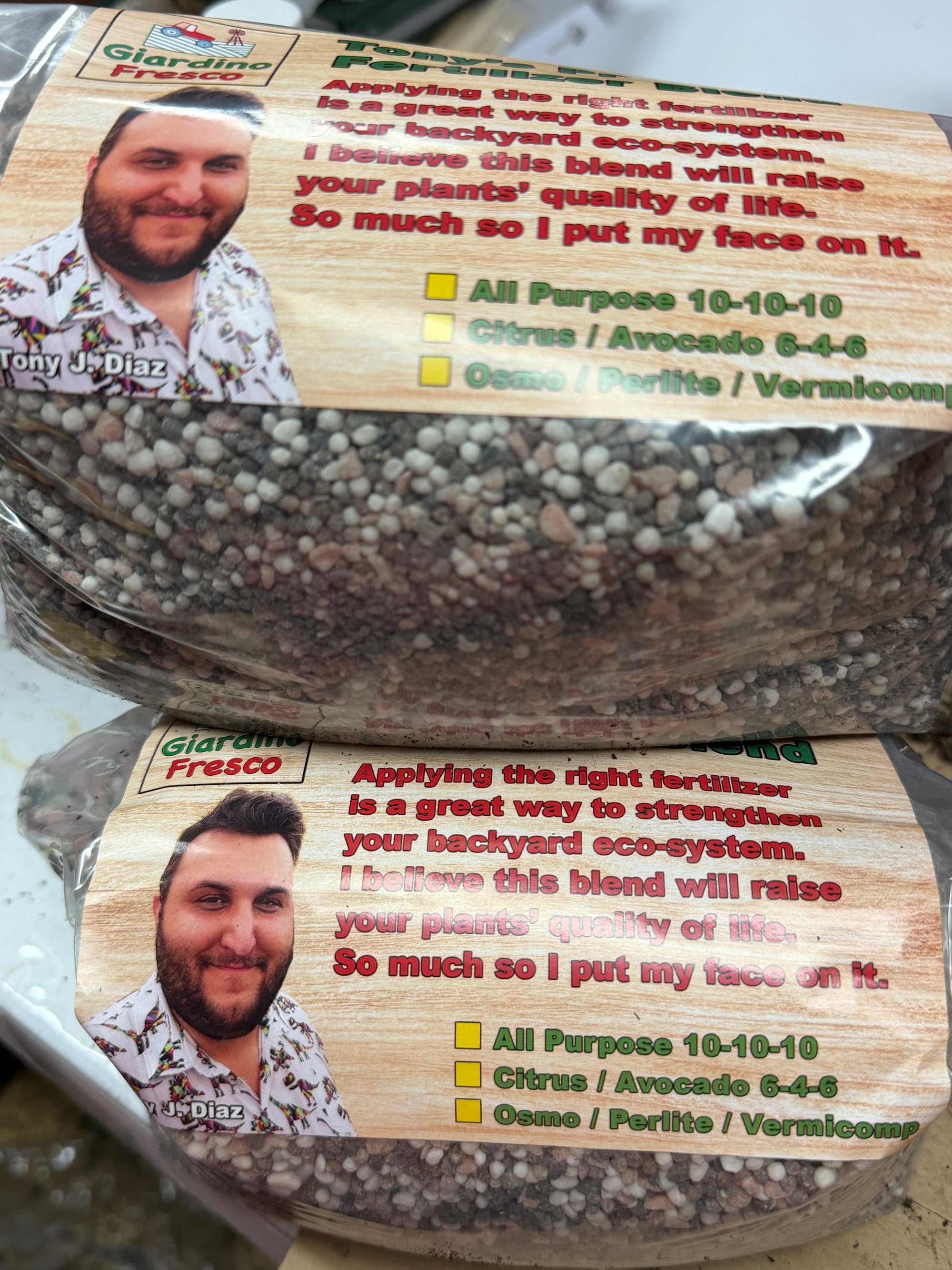
Give your new fruit tree the best possible start. The first few weeks in the ground decide how fast a young tree settles in. This kit has the two things we use at our Miami nursery every time we plant: a balanced feed and a root-friendly soil amendment. What's in the kit 5 lb 10-10-10 fruit tree fertilizer. Equal parts nitrogen, phosphorus and potassium for new leaves, strong roots and, later, flowers and fruit. 5 lb covers the first several feedings. 1 coconut coir brick (expands to 0.5 cu ft). Mix it into the planting hole or pot. It holds moisture without waterlogging, keeps soil loose so new roots can spread, and helps our sandy and rocky South Florida soils hold water. Why it matters Faster establishment: roots grow out into loose, moist soil instead of circling in a dry hole. Less transplant shock: steady moisture and nutrients through the first weeks after planting. Fruit sooner: a tree that settles in quickly puts its energy into growth, so it reaches fruiting size sooner. How to use Soak the coir brick in about 1 gallon of water until it expands, then fluff it. Mix the coir with your native soil or potting mix, then plant the tree at the same depth it sat in its nursery pot. Water deeply. Once you see new growth, scatter fertilizer around the drip line (not against the trunk) following the label rate, and water it in. Made for mango, avocado, soursop, guava, sugar apple and the other tropical fruit trees we grow. Add one for every tree in your order.

Regular price $22.00
Regular price Sale price $22.00
Unit price  per 
Close-up of the green leaves of an ice cream bean (Inga) plant

Ice Cream Bean Plant 14"-20" / 1 Gal

From Tony, the grower: I grow ice cream bean in my own Miami yard. The pods taste like vanilla ice cream and the tree feeds its own soil. Ice Cream Bean Tree (Inga edulis) – Discover one of the most delightful and surprising tropical fruits you can grow at home — the Ice Cream Bean! Also known as Pacay or Guaba, this fast-growing tree from the legume family produces long, velvety pods filled with sweet, fluffy white pulp that tastes remarkably like vanilla ice cream — no added sugar, no flavoring, just pure natural sweetness straight from the pod. Why You’ll Love Growing Ice Cream Beans: Unique Flavor: The cottony, melt-in-your-mouth aril surrounding the large seeds has a creamy, fragrant vanilla taste that kids and adults go crazy for. Eat it fresh right off the tree for the ultimate backyard treat. Nitrogen-Fixing Superstar: As a member of the Fabaceae family, the Ice Cream Bean tree naturally improves your soil by fixing nitrogen — making it an excellent companion plant for your other fruit trees and a sustainable addition to any edible landscape. Fast-Growing & Productive: These trees grow vigorously, providing quick shade with their lush, umbrella-like canopy while delivering heavy crops of long pods (often 1–2 feet or more) in just a few years. Tropical Beauty: Beautiful pinnate leaves and striking white flower puffs make it an ornamental standout in subtropical gardens, patios, or container setups. Perfect for USDA zones 10–11 and subtropical climates like Florida, the Ice Cream Bean thrives in full sun with well-draining soil. It’s relatively low-maintenance once established and adds both delicious edible value and ecological benefits to your home orchard. At Giardino Fresco, we offer healthy, vigorous Ice Cream Bean plants ready to ship to your door with our Arrives Alive Guarantee. Whether you’re starting a tropical food forest or just want something fun and exotic for the backyard, this is a must-have rarity that never fails to impress. Bring home the magic of nature’s own ice cream — order your Ice Cream Bean tree today! Ice cream bean growing guide Plant facts at a glance Botanical name: Inga edulis What ships: 1 gallon (14–20 in. listed) Mature size: A fast-growing tree, 30 ft or more. Easily pruned. Sun: Full sun. Water: Regular water. Cold hardiness / USDA zones: Zones 10–11. Damaged by frost. Time to fruit: Often 2–3 years. Taste and uses: The sweet, cottony pulp around the seeds is eaten fresh. Container vs. in-ground: Possible while young. It's vigorous, so the ground is better. Care As a legume it fixes nitrogen and needs little fertilizer. Prune hard to keep it a manageable size. Eat pods fresh, because they spoil quickly. Frequently asked questions What does ice cream bean taste like? Sweet, with a vanilla-like, cotton-candy texture. How fast does it grow? Very fast. Prune it yearly. Is it cold-hardy? No. Protect it from frost. Are the seeds edible? The pulp is the part that's eaten. Seeds are usually cooked if eaten at all. Do you ship to my state? Yes. Ships nationwide, with shipping calculated at checkout. Local pickup in Miami and delivery in Miami-Dade also available. Questions? Call or text Tony at 786-774-2125. Results vary with climate and care. Complete growing guide: Ice Cream Bean Growing Guide: Care, Pests and Harvest in South Florida

Regular price $65.00
Regular price Sale price $65.00
Unit price  per 
Grafted Kent mango tree in a black pot, one of the trees you can pick in the Pick Any 2 bundle

Kent Mango Grafted / 3 Gal

From Tony, the grower: Raised and hand-picked by Tony at our Miami nursery. Every Kent Mango we send is a tree I've looked after here in Miami. Size: Grafted, in a 3 gallon pot. See our shipping policy for how trees are packed for shipping. Bigger trees, fairer prices. We keep our prices fair so you get more tree for your money. Care basics: Plant in full sun in well-draining soil, water deeply 2-3 times a week while it settles in, then let the top inch of soil dry between waterings. Feed lightly with a balanced fertilizer during the warm months, and protect young trees from frost (cover or move inside if temperatures drop near freezing). Makes a great gift: Sending it as a gift? Email your gift message to tony@giardinofresco.com after you order and we'll include a gift note with the tree. Shipping: Ships nationwide, with shipping calculated at checkout. Local pickup in Miami and delivery in Miami-Dade also available. Questions? Call or text Tony at 786-774-2125. **Grafted Kent Mango Tree (Mangifera indica 'Kent')** A Florida-born legend and one of the most beloved late-season mangos—**Kent** delivers big, juicy perfection with that classic sweet-tropical punch that keeps growers coming back year after year! These premium **grafted** trees produce medium-to-large, oval-to-oblong fruits (typically 1–2 lbs, 20–26 oz or more) with smooth, thick green skin that develops a beautiful **red blush** over yellow undertones when ripe. The flesh is deep yellow to orange, completely **fiberless**, ultra-juicy, tender, and meltingly smooth—bursting with rich, sweet flavor accented by mild peach, tropical fruit, and subtle aromatic notes (often called one of Florida's sweetest and best-tasting varieties, with excellent eating quality and minimal tang). The tree has a vigorous, upright-to-spreading growth habit with a dense, rounded canopy of large, glossy green leaves—reaching 20–40 feet tall if unpruned, but easily managed smaller (15–25 feet) with regular pruning for backyards, orchards, or larger spaces. Grafted specimens guarantee true-to-type fruit and faster production—often bearing in 3–5 years—with heavy, reliable late-season crops ripening **July–August** (sometimes into September) in Florida and similar subtropical climates, perfectly extending your mango season after earlier varieties fade. Originating as a Brooks x Haden seedling in Coconut Grove, Florida (1945), Kent is a commercial favorite worldwide for its productivity, shelf life, and standout quality—thriving in warm, humid conditions (USDA zones 9b–11; protect young trees from rare freezes below ~30°F). Note: In high-humidity areas like South Florida, monitor for bacterial black spot; good airflow and care help keep it thriving. Elevate your mango grove with this timeless powerhouse—homegrown Kent mangoes that bring massive size, fiber-free sweetness, and late-summer bliss straight to your table! Order your Grafted Kent Mango Tree today from Giardino Fresco and savor one of Florida's all-time greats. Ideal for: late-season extension, large-fruit enthusiasts, backyard orchards, commercial-style growers, and anyone craving rich, juicy mangos that shine in July–August. Mango growing guide Kent is a late-season Florida mango with juicy, fiberless flesh. Plant facts at a glance Botanical name: Mangifera indica Listed size: 3 gallon Mature size: Standard mango trees can reach 30–40 ft or more in the ground. With yearly pruning after harvest, most home growers keep them at 10–15 ft. Sun: Full sun (8+ hours). Needs good drainage. Once established it tolerates South Florida's sandy and rocky soils. Water: Water deeply 2–3 times a week the first few months, then about weekly in dry spells. Established trees are fairly drought tolerant. Avoid soggy soil. Cold hardiness / USDA zones: USDA zones 10–11, and warm spots in 9b. Young trees are damaged near 30–32°F and mature trees at about 25°F. North of zone 10, keep it in a container or protect it from frost. Time to fruit: Grafted trees often flower within 1–3 years and fruit in about 3–4 years. Florida mangoes mostly ripen May–September, depending on variety. Taste and uses: Fresh eating, smoothies, juices, salsas, chutneys, desserts and drying. Green mango is used in pickles and salads. Container vs. in-ground: Compact ('condo') varieties do well for years in a 15–25 gallon pot with pruning. Standard varieties are best in the ground in zone 10b–11. Care Fertilize young trees lightly every 1–2 months in the growing season with a fruit-tree mix (for example 6-6-6 or 10-10-10 with minors), tapering off as the tree matures. Prune right after harvest to keep the tree low and open. Avoid heavy pruning in late fall, because that removes next year's flowers. Watch for anthracnose on flowers and fruit in wet weather. Good airflow and copper sprays (per label) help. Mulch 2–4 in. deep, keeping it a few inches away from the trunk. Frequently asked questions How long until a grafted mango tree fruits? Grafted trees usually flower within 1–3 years and set useful crops in about 3–4 years. Seedling trees can take 5–8 years. Can I grow a mango tree in a pot? Yes, especially dwarf or 'condo' types. Use a large, well-draining pot (15–25 gallons once established), prune after harvest, and move it inside if frost threatens. How cold can a mango tree handle? Young trees can be damaged near freezing (30–32°F). Cover or move potted trees when cold is forecast. Why are my mango flowers turning black? Usually it's anthracnose, a fungus that spreads in rainy or humid weather during bloom. Good airflow and a labeled fungicide during flowering help. Do you ship to my state? Yes. Ships nationwide, with shipping calculated at checkout. Local pickup in Miami and delivery in Miami-Dade also available. Questions? Call or text Tony at 786-774-2125. Growing information is based on University of Florida IFAS Extension guidance. Results vary with climate and care. Complete growing guide: Kent Mango Growing Guide: Care, Pests and Harvest in South Florida

Regular price $55.00
Regular price Sale price $55.00
Unit price  per 
View product

Sold out

Dwarf Everbearing Mulberry

Grown by Tony in Miami. Ships nationwide, with shipping calculated at checkout. Local pickup in Miami and delivery in Miami-Dade also available. Text Tony: 786-774-2125 Dwarf Everbearing Mulberry (Morus sp.), 1 gallon. A compact, self-fruitful mulberry that stays small with light pruning, which makes it one of the easiest fruit trees for a patio pot or a small yard. It produces sweet, dark berries in repeated flushes through the warm season, so you pick handfuls over many weeks instead of one short harvest. Plant facts at a glance Size shipped: 1 gallon pot. Mature size: Easily kept at 4–6 ft with tip pruning after each fruit flush. Sun: Full sun for the best crop. Tolerates part shade. Water: Water deeply 2–3 times a week while it settles in, then when the top inch of soil is dry. Containers dry out faster in summer. USDA zones: 7–10 in the ground. Colder areas can grow it in a pot and shelter it in winter. Fruit season: Often starts in late winter or spring in Florida and keeps flushing into summer and fall after pruning. Container friendly: Yes. Start in a 5–10 gallon pot and move up as it grows. Care tips Prune branch tips after each flush to trigger new fruiting wood. Feed lightly with a balanced fertilizer in spring and summer. Shipping: Ships nationwide, with shipping calculated at checkout. Local pickup in Miami and delivery in Miami-Dade also available. Questions? Call or text Tony at 786-774-2125. Complete growing guide: Dwarf Everbearing Mulberry Growing Guide: Care, Pests and Harvest in South Florida

Regular price $45.00
Regular price Sale price $45.00
Unit price  per 
View product